

Prof. David Esseni
NanoElectronic Devices and Circuits (NEDeC)
https://nanoelectronics.uniud.it/
University of Udine
david.esseni[at]uniut.it
David Esseni received the Ph.D. in Electronic Engineering from the University of Bologna (Italy) in 1999. During year 2000, he was a visiting scientist at Bell Labs – Lucent Technologies, Murray Hill (NJ-USA). In year 2013 he was a visiting professor at the University of Notre Dame (Indiana, USA), supported by a Fulbright Research Fellowship. His research interests are mainly focused on the modelling, simulation and experimental characterization of novel nanoelectronics devices and materials, and on an early circuit assessment of emerging nanoelectronic technologies.
D. Esseni is a Fellow of the IEEE Electron Devices Society, and in 2013 he won a Fulbright Fellowship in the Research Scholar category. He was Associate Editor of IEEE Transactions on Electron Devices from 2008 to 2017. He is co-author of the book “Nanoscale MOS transistors: Semi-classical transport and application”, Cambridge University Press. He was General Chair of SISPAD 2019 (held in Udine), and he is or has been part of the TPC of several internation conferences, including IEDM, IRPS, ESSDERC, SISPAD. He has been the principal investigator (PI) at the University of Udine for several research projects funded by the Italian MUR, by the European Union or by industries.

Prof. Francesco Driuissi
Department of Engineering and Architecture (DPIA)
https://nanoelectronics.uniud.it/
University of Udine
francesco.driuissi[at]uniut.it
Francesco Driussi received the Ph.D in Electronics from the Università degli Studi di Udine (Italy) and 2004. Since October 2018, he is Associate Professor at the Polytechnic Department of Engineering and Architecture (DPIA) of the Università degli Studi di Udine. Previously, he has been Research Associate for the same department (2005-18) and he was also Visiting Scientist at Philips Research Leuven in the IMEC research center in Belgium (2003).
Francesco Driussi’s activity is in the field of device level characterization and physics-based modeling of nano and microelectronic devices. In particular, he is an expert in the design of experiments and development of characterization techniques for emerging nanoelectronic technologies. His modeling activity supports the experimental characterization in the development of novel device architectures and materials for nanoelectronic applications, including memory cells, advanced CMOS transistors and sensors, 2D material-based devices and ferroelectric memristors for neuromorphic computing.
During his activity, Francesco Driussi has been collaborated with important Semiconductor companies (NXP, ST Microelectronics), European Research centers (CEA-Leti, France; KTH, Sweden; AMICA-AMO and NaMLab, Germany; IMEC, Belgium; IMM-CNR and Elettra, Italy) and prestigious European Universities. He has also been involved in several Research Projects funded by the EU or the Italian Ministry for University Education and Research (MIUR).
Francesco Driussi co-authored more than 100 peer-review research articles and he is Associate Editor for Frontiers in Electronics. He also serves as reviewer for more than 15 international journals and he is or has been part of the Technical Committees of important Conferences in the field of semiconductors (IEDM, ICMTS).
Former project team members
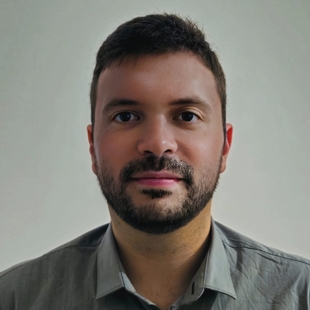
Dr. Mattia Segatto
NanoElectronic Devices and Circuits (NEDeC)
https://nanoelectronics.uniud.it/
University of Udine
Mattia Segatto received the B.Sc. degree in Electronics Engineering in 2018 and the M.Sc. degree in Electronics Engineering in 2020 from University of Udine, Italy. In 2020 he joined the NanoElectronic Devices and Circuits (NEDeC) group at University of Udine as a PhD student in Industrial and Information Engineering under the supervision of Professor David Esseni and in 2024 received the PhD with a thesis entitled: Modeling and Simulation of Ferroelectric-based Devices for Neuromorphic Computing Applications. After, he continued his research activity in the NEDeC group as a post-doctoral fellow. His research work focus on the modelling and simulation of ferroelectric-based devices, such as Ferroelectric Tunnel Junctions (FTJs) and Ferroelectric FETs (FeFETs) that are candidate hardware for neuromorphic computing.

Dr. Chiara Rossi
NanoElectronic Devices and Circuits (NEDeC)
https://nanoelectronics.uniud.it/
University of Udine
Chiara Rossi received the M.Sc. degree in Micro and Nanotechnologies for Integrated Systems in 2016 from École Polytechnique Fédérale de Lausanne (EPFL), Switzerland, Institut National Polytechnique de Grenoble, France, and Politecnico di Torino, Italy. In 2016, she joined the Electron Device Modeling and Technology Laboratory (EDLab) at EPFL and in 2021 she obtained the PhD degree in Microsystem and Microelectronics from EPFL with a thesis on a novel modelling approach for the SPICE simulation of optoelectronic devices and radiation effects in integrated circuits. She then joined the Fraunhofer Institute for Integrated Systems and Device Technology (IISB) in Erlangen, Germany, in 2021, where she worked on process simulation for nanoelectronic devices, with focus on gate-all-around nanowire transistors fabrication technologies and low temperature processes for 3D sequential integration. She also worked on simulation of CdTe X-ray detectors and compact modeling of the 4H-SiC CMOS transistors developed at Fraunhofer IISB. In November 2023, she joined the NanoElectronic Devices and Circuits (NEDeC) group at the University of Udine, where, from November 2023 to October 2025, she conducted her research on Ferroelectric Field-Effect Transistors (FeFETs) for neuromorphic computing applications supported by a Marie Skłodowska-Curie Action (MSCA) Postdoctoral Fellowship.